The specimen is the first boundary
A laboratory does not test an abstract category such as “protective foam.” It tests an identified piece of material, prepared in a particular shape and condition. The result may be useful evidence for a wider production batch, but that connection depends on sampling and traceability. A beautifully formatted report cannot repair a specimen whose origin is unclear.
For an equipment buyer, the first task is to match the report description to the supplied product. Look for the material grade, supplier reference, batch or lot, colour, nominal thickness and construction. For a product team, add the manufacturing route and revision history. A moulded skin, laminated backing or adhesive layer can change behaviour even when the core polymer has the same commercial name.
Construction matters as much as chemistry
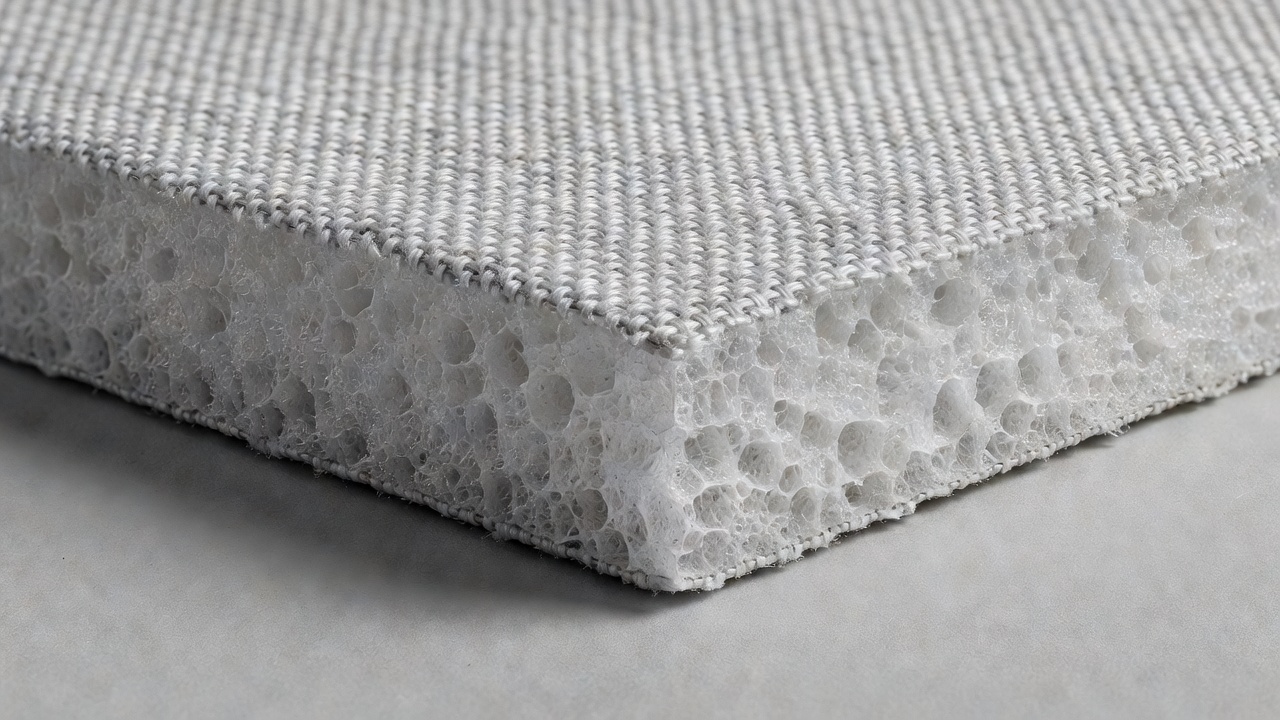
Sports equipment combines materials that behave differently in isolation and together. A grip may depend on an elastomer, a surface texture and a bond to a rigid handle. Protective padding may include open-cell foam, closed-cell foam, fabric and a shell. A textile can behave differently along its warp, weft or bias. Describe the construction rather than reducing everything to one ingredient.
Density and hardness are useful identifiers, but neither is a complete performance description. Two foams with similar density can differ in cell geometry, recovery and compression response. Two rubber compounds with similar indentation hardness can have different friction or tear behaviour. Treat a property as an answer to a particular question, not a universal quality score.
“Same material” is a traceability claim. Ask which records make it true.
Who selected the sample?
A supplier-selected coupon and a sample independently taken from finished stock do not establish the same chain of evidence. Record who selected the specimen, from where, on what date and using what plan. If the laboratory received the item from a customer and did not perform the sampling, the report may explicitly limit responsibility to the material received.
Variation within a sheet, moulding or production run matters. Cutting several specimens from one small area may describe that area well while missing wider variation. A sampling plan should connect the intended claim to likely sources of variability: different cavities, manufacturing dates, suppliers or thicknesses. There is no universal sample count suitable for every material and decision.
Conditioning is part of identity
Temperature, moisture, storage and prior loading can influence measured behaviour. A specimen tested immediately after manufacture may not behave like one stored, washed or used repeatedly. Conditioning instructions establish a controlled starting point; they do not automatically reproduce every sporting environment. Ask which conditioning atmosphere was used, how long the specimen was exposed and whether the method required it.
For textiles, ISO 139 provides standard atmospheres for conditioning and testing. Other material methods contain their own preparation requirements. Where wet use, cold conditions or repeated impact matter, discuss an appropriate additional programme with a competent laboratory. Do not quietly substitute a use simulation for a standard method and then describe the modified result as fully standard-compliant.
Preparation can change the answer
Cutting, machining and clamping can introduce damage or remove features that exist in the product. A thin specimen may exclude the moulded surface that helps a thicker component resist wear. A textile specimen may unravel at the edge. Record the cutting direction, dimensions and any departures from specified preparation. These details help distinguish a real material difference from a preparation effect.
Retained samples can be valuable when a question arises later, but retention is not automatic. Agree on storage, duration, identification and disposal before testing. Photographs and preparation notes also help preserve context. A retained specimen without a reliable label is less useful than a clearly documented record with a known limit.
Build a usable material dossier
Keep the purchase specification, supplier declaration, sampling record and laboratory report together. Link each to the product revision and production period it supports. If a supplier changes a formulation, factory, pigment, thickness or bonding process, assess whether the change could affect the claimed property. A historical report is not a permanent permission slip for every later version.
Finally, separate material performance from chemical compliance. A tensile or abrasion result does not demonstrate compliance with chemical restrictions. Where relevant, evaluate substances under the applicable legal framework, including REACH in the European Union. That assessment needs its own scope, information and evidence. One report may answer an important question while leaving several others entirely open.
Source notes
- ISO catalogue: consult ISO 139 for textile conditioning and ISO 3386-1 for compression stress–strain characteristics of low-density flexible cellular materials. Check the current edition and scope.
- ASTM International: ASTM D3574 covers test methods for flexible cellular materials, including slab, bonded and moulded urethane foams.
- European Chemicals Agency: understanding REACH. Chemical obligations are separate from mechanical test outcomes.